When most people decide they want to get in better shape, they focus on motivation. They wait for the right mindset, the right energy, or the perfect week to start. The problem? Motivation is unreliable. It comes and goes based on sleep, stress, work, weather, and life. If motivation were enough, most people would already be in the best shape of their lives.
The people who actually change their bodies long-term don’t rely on motivation — they rely on habits.
Why Habits Matter More Than Intensity
Getting in shape is not about one killer workout or one perfect week of eating. It’s about repeated behaviors done consistently over time. Habits remove decision-making from the process. When something becomes a habit, you don’t debate it — you just do it.
Think about brushing your teeth. You don’t need motivation. You don’t wait until you “feel like it.” You do it because it’s part of who you are and how your day works. Training needs to live in that same category.
A moderate workout done consistently for months will always outperform an extreme program done for three weeks.
How Long Does It Take to Build a Habit?
You’ve probably heard the “21 days” rule. The reality is a bit more nuanced. Research suggests that habit formation can take anywhere from 30 to 90 days, depending on the person, the behavior, and the complexity of the habit.
The key point is this:
The goal early on is not perfection — it’s repetition.
Those first weeks feel awkward. It feels forced. You don’t always see results. That’s normal. You’re laying down neurological pathways and routines. Once the habit is established, momentum carries you forward with far less effort.
This is why starting with realistic frequency and intensity matters. If you try to train six days a week for two hours when you’ve been doing nothing, you’re not building a habit — you’re setting a trap.
Motivation Is Fleeting. Discipline Is King.
Motivation is emotional. Discipline is behavioral.
Motivation says, “I’ll go when I feel ready.”
Discipline says, “This is what I do.”
Discipline isn’t about being hardcore or miserable. It’s about keeping promises to yourself, especially when it would be easier not to. The days you don’t feel like training are often the most important days to show up — not because the workout will be amazing, but because it reinforces your identity.
Every time you show up despite low motivation, you strengthen the habit.
Treat Training Like an Appointment With Yourself
One of the biggest mindset shifts is treating your workouts like a non-negotiable appointment.
You wouldn’t skip a work meeting because you’re tired. You wouldn’t cancel a doctor’s appointment because you didn’t feel motivated. Training deserves the same respect.
Schedule it. Put it on your calendar. Protect that time.
When you treat workouts as optional, they’ll always be the first thing to go when life gets busy. When you treat them as an appointment with yourself, they become part of your structure — not an afterthought.
The Long Game Wins
Getting in shape isn’t about doing everything perfectly. It’s about showing up consistently enough that training becomes automatic. Habits create freedom. They remove friction. They allow results to happen in the background while life continues.
The gym that was packed two weeks ago has thinned out. The resolution crowd is disappearing. And if you’re reading this, there’s a good chance you’re thinking:
“I already fell off. I guess I just don’t have the discipline.”
Let’s clear something up right away:
You didn’t quit because you’re lazy. You quit because you set yourself up to fail.
Most New Year’s gym resolutions don’t fail because people lack motivation. They fail because the plan is unrealistic from day one.
The Common Trap: Too Much, Too Fast, Too Soon
Every January, people do the same thing:
5–6 days a week in the gym 90–120 minute workouts Extreme soreness Massive calorie cuts A timeline that demands visible results in 14–21 days
That approach works… for about two weeks.
Then real life shows up.
Work runs late. Sleep gets shorter. Motivation drops. Your joints hurt. Progress stalls. And suddenly missing one workout turns into missing the whole week. Before you know it, the identity shift happens:
“I’m just not a gym person.”
That’s not a character flaw. That’s a planning problem.
Most People Should Not Be in the Gym 6 Days a Week
Here’s a truth that doesn’t get said enough:
The majority of people do not need — and should not be doing — high-frequency, high-volume training.
If you:
Have a job Have kids Have stress Haven’t trained consistently for years
Then attacking the gym six days a week is not discipline — it’s self-sabotage.
The goal of training isn’t to survive the most workouts possible.
The goal is to show up consistently for years.
A Better Reset: Do Less — But Do It Well
If you already quit your resolution, good. That means you now get to restart with a smarter plan.
Here’s what actually works for most people:
2–3 days per week
30-60 minutes per session
That’s it.
When training volume drops, quality must rise. This is where real progress happens.
Focus on a Few Solid Movements
You don’t need endless exercises. You don’t need variety for the sake of novelty. You need foundational movements done well.
Examples:
Squat and hinge (squat, deadlift, trap bar, kettlebell hinge)
Push (push-ups, bench press, overhead press)
Pull (rows, pull-ups, lat pulldowns)
Carries or core stability work
That’s it.
Learn how to perform these movements properly. Control the weight. Own the positions. Build strength in ranges of motion that matter.
Mastery beats exhaustion every time.
Progressive Overload: The Missing Ingredient
Most people fail not because they don’t work hard — but because they don’t progress.
Progressive overload simply means:
Gradually adding weight Adding reps Improving control Increasing total work over time
Not all at once. Not every workout. But consistently.
When you do this, something interesting happens:
Muscle builds Strength improves body composition improves Confidence grows
And it happens without living in the gym.
Why Short-Term Intensity Fails (Every Time)
High intensity feels productive. It feels like commitment. It feels like change.
But intensity without sustainability is just a countdown clock.
The body adapts best to repeated, manageable stress — not occasional heroic efforts followed by burnout.
You don’t get in shape from your hardest week.
You get in shape from your average week repeated for years.
Long-Term Consistency Always Wins
Read this carefully:
Consistency beats intensity when intensity isn’t sustainable.
Two workouts per week for the entire year will outperform:
Six workouts per week for one month Zero workouts for the next eleven months
The goal is to still be training in July… and December… and five years from now.
If You Quit Already — You’re Not Behind
You didn’t miss your chance.
You didn’t “blow it.”
You didn’t fail.
You just learned something valuable:
That plan wasn’t built for your life.
So reset. Simplify. Lower the barrier to entry. Choose a schedule you can keep on your worst week — not your best one.
Because the people who look strong, lean, and capable aren’t the ones who trained the hardest for 30 days.
The skipped sessions justified by being “busy” or “tired.”
The routine that feels good but changes nothing.
It feels productive. It feels safe.
And it quietly keeps you exactly where you are.
Because the truth is simple: the comfortable road will never build the capable body — or the person — you’re destined to be.
Comfort Is the Enemy of Adaptation
The human body adapts only when it’s challenged.
If a stimulus doesn’t demand more from you, the body has no reason to change. Muscles don’t grow. Strength doesn’t increase. Work capacity stays flat. Over time, even fat loss stalls because the body becomes efficient at the same old demands.
Comfort preserves your current state.
Discomfort creates adaptation.
This is why progressive overload matters. This is why intensity matters. This is why doing “the same workout” eventually stops working.
The moment your workouts feel easy is the moment they stop changing you.
The Gym Is a Mirror for Life
The lessons learned under the bar transfer far beyond the gym.
When the weight feels heavy, your nervous system wants you to stop. When your lungs burn, your brain looks for an exit. That voice telling you to rack the weight early is the same voice that shows up in life when things get uncomfortable.
Training teaches you to stay present in discomfort.
Each rep you finish when quitting feels easier builds mental resilience. Each session you show up for when motivation is low builds discipline. Each hard workout expands your belief in what you can handle.
The gym becomes rehearsal for life.
Comfortable Training Creates Comfortable Limits
Many people train consistently — but never progressively.
They stay in their comfort zone because it feels sustainable. But sustainability without challenge leads to stagnation. You don’t get weaker, but you don’t get stronger either.
Comfortable training creates comfortable limits:
Limited strength Limited conditioning Limited confidence Limited belief in your own toughness
Hard training, when applied intelligently, expands those limits.
Not reckless training. Not ego lifting.
Intentional discomfort.
Discomfort Builds More Than Muscle
Hard training reshapes your identity.
When you do difficult things repeatedly, you stop negotiating with yourself. You become someone who follows through. Someone who can suffer briefly for long-term gain.
That mindset bleeds into nutrition, sleep, recovery, work, and relationships. You stop looking for shortcuts. You stop avoiding effort. You start trusting yourself.
Physical discomfort becomes a tool — not something to fear.
The Comfortable Road Shrinks Your Potential
If you always choose the easier option, your body responds accordingly.
Strength plateaus. Mobility declines. Work capacity fades. And over years, comfort slowly erodes physical independence.
The uncomfortable road does the opposite.
It builds bone density. It preserves muscle mass. It strengthens joints and connective tissue. It trains your cardiovascular system to handle stress. It keeps you capable as you age.
The irony is that temporary discomfort in training creates long-term comfort in life — moving better, aging better, and staying independent longer.
Progress Lives Just Past Comfort
Every meaningful breakthrough in fitness happens just beyond your comfort zone.
The rep you didn’t think you had.
The run you finished despite wanting to stop.
The weight you finally lifted after weeks of doubt.
Those moments don’t happen by accident. They happen because you were willing to lean into discomfort rather than back away from it.
You don’t find your strongest self — you build it, one uncomfortable session at a time.
Comfort Is for Recovery — Not for Growth
Rest is essential. Recovery matters. Smart programming includes deloads, lighter days, and strategic rest.
But there’s a difference between recovery and avoidance.
Recovery prepares you to train harder next time.
Avoidance keeps you comfortable and unchanged.
The key is learning when to rest — and when to push.
When people hear “core training” they often think about abs and crunches. But the true role of your core is to protect—against injury and poor movement patterns. A strong core doesn’t just move; it resists movement when necessary. This is where anti-rotation, anti-extension, and anti-lateral flexion come in. These three key functions often get overlooked but are crucial for athleticism, longevity, and pain-free movement. Let’s break down these anti-movement patterns, why they matter, and how to train them progressively in the gym.
Rethinking the Core: What It Actually Does
Your core is far more than just your abdominals. It includes deeper stabilizing muscles like the transverse abdominis and multifidus, your obliques, spinal erectors, the diaphragm, pelvic floor, and even the glutes and lats. Together, these muscles don’t simply help you move—they create a strong foundation for controlled, stable movement across the entire body. In almost every meaningful physical task, your core acts as a stabilizer, not mover. It braces during a squat, resists spinal extension during an overhead press, and controls rotational force during running, throwing, or swinging.
When the core can’t do this job—when it collapses or compensates—injuries tend to follow. This is why training your core to resist movement is just as, if not more, important than training it to create movement. And this brings us to the concept of anti-movement training: anti-rotation, anti-extension, and anti-lateral flexion.
Anti-Rotation
Anti-rotation exercises are designed to help your body resist twisting or turning, especially when under load. Think about carrying a heavy dumbbell in one hand or pressing with a single arm—your torso wants to rotate, but your core must lock it down and stay centered.
A good place to start is the Pallof press, a simple cable or band exercise that challenges your ability to resist rotation as you press your arms straight out from your chest. From there, you can progress to more dynamic versions, such as the half-kneeling Paloff press, which adds lower body instability, or single-arm cable presses, which replicates real world force production while forcing the core to stabilize. For athletes or advanced lifters, landmine rotations and medicine ball catch and throws mimic explosive, sport specific demands while developing stability and reactivity through the trunk.
Anti-Extension
Anti-extension training teaches you how to resist lumbar spine hyperextension—a common issue when people lack proper bracing during heavy lifts or overhead work. The lower back arching excessively during a deadlift, a press or even standing posture is often a sign that the core is not doing its job.
A well-executed dead bug is one of the best starting points for this. It forces you to coordinate breath, bracing, and movement without letting your low back peel off the ground. From there, planks—especially the RKC variation—start to build full-body tension and longer-duration control. As you advance, ab wheel rollouts and body saws demand immense control through extended ranges of motion. All of these progressions reinforce the same principle: keep the spine neutral and resist any urge to let the rib cage flare or pelvis tilt.
Anti-Lateral Flexion
Anti-lateral flexion is all about resisting side bending, especially when there’s an uneven load pulling you off center. It’s a key function of the obliques, quadratus lumborum, and glute medius, and it plays a massive role in posture, gait, and loaded carries.
The suitcase carry—walking while holding a kettlebell or dumbbell in one hand—is a simple but brutally effective way to train this. You’ll feel your core and hips working overtime to prevent collapse toward the weight. From there, side planks can be scaled in intensity with leg lifts, rows, or added load. More advanced variations like the single arm overhead carry or offset kettlebell front rack walk force the body to stay tall and braced while being pulled off center by challenging loads. These exercises build real world strength and reinforce postural integrity under dynamic conditions.
The Why
Training your core to resist motion isn’t just about avoiding injury—though that’s a huge benefit. It’s also about improving force transfer, especially for those who lift heavy, sprint, rotate, or play contact sports. A stable core connects the hips and shoulders, allowing you to produce more power with less effort. It helps you maintain posture under fatigue. And perhaps most importantly, it makes your body more resilient—less prone to tweaks, breakdowns, and imbalances over time.
Too often, core training gets reduced to reps of crunches or leg raises, which have their place. But those movements train the core primarily as a mover. While there is nothing wrong with them, they’re only a small part of the picture. The foundation of a strong, high-performing core is stability and that comes from mastering anti-movement.
Final Thoughts
Think of your core not as your abs but as your center of control. When trained properly, it keeps you safe under load, efficient in movement, and powerful through every rep. Instead of asking your core to constantly bend, twist, or flex, teach it to resist. That’s where real strength lives. And it’s how you build a body that’s not just strong—but built to last.
In an age of instant gratification, academic stress, and constant comparison, building a strong sense of self-worth in young people is more important than ever. While team sports, arts, and academics all play a role in youth development, one of the most overlooked tools for building deep, lasting confidence is strength training.
When guided properly, strength training for youth is more than just physical development—it becomes a powerful platform for building character, emotional resilience, and the belief that they can face life’s challenges head-on. Whether it’s a teen athlete, a quiet student, or a child struggling with anxiety, the barbell can become a teacher, mentor, and motivator all in one.
Strength Training: The Confidence Catalyst
When a young person picks up a weight, they’re doing more than just lifting. They’re learning discipline, consistency, and what it feels like to push beyond limits. Each rep, each small increase in strength, gives them tangible proof that they are capable of change. This builds a sense of control—over their body, their choices, and eventually, their mindset.
Unlike team sports that sometimes favor natural talent, strength training rewards effort. You don’t have to be the tallest or the fastest. You just have to show up and work hard. That sense of earned accomplishment builds authentic confidence—confidence that says, “I did this. I can do more.”
Confidence That Shows Up Everywhere
In Sports:
Youth strength training improves athletic performance, yes—but more importantly, it teaches athletes to trust themselves. Stronger kids are less likely to be intimidated by competition, more likely to recover from failure, and more resilient under pressure. Whether it’s getting up after a fall or staying calm in a playoff game, that inner strength comes from the gym as much as the field.
In School:
Strength training helps improve focus, mental clarity, and self-regulation. It teaches patience—results don’t come overnight. This directly transfers into academic performance, where delayed gratification and consistent effort pay off. Plus, as self-confidence grows, students are more likely to speak up in class, take on leadership roles, or pursue challenging goals.
In Careers:
The traits built in the weight room—discipline, consistency, and resilience—are the same traits that drive success in the workforce. Young people who strength train often grow into adults who understand the value of showing up daily, doing hard things, and taking ownership of outcomes. They’ve learned that discomfort is part of growth, and that mindset makes them stand out.
In Family and Relationships:
Self-worth is the foundation of healthy relationships. Youth who feel good about themselves are less likely to seek validation from the wrong sources. They tend to communicate better, set healthy boundaries, and contribute positively to their families and communities. When young people believe in themselves, they treat others with greater respect and compassion.
More Than Muscle: Building the Inner Armor
Strength training doesn’t just build bodies—it builds belief. And that belief becomes a form of armor, helping young people face life’s inevitable challenges. Whether it’s bouncing back from a breakup, handling peer pressure, or applying for a dream college, the quiet confidence built under the barbell follows them into every arena of life.
And perhaps most importantly, strength training helps youth reframe their relationship with failure. A missed lift isn’t the end—it’s feedback. It’s fuel. Learning to try again, to refine technique, to not give up—this is the mindset that builds lifelong self-worth.
A Call to Action for Parents, Coaches, and Educators
If you’re in a position to guide youth—whether as a parent, coach, teacher, or mentor—consider how strength training can be a transformative tool. It doesn’t have to be extreme. Age-appropriate, supervised programs that focus on technique, consistency, and fun can create profound change—not just in how a young person moves, but in how they see themselves.
In a world that often tells youth they’re not enough, strength training gives them a powerful message: You are capable, you are strong, and you can shape your own future.
Let’s start building not just stronger kids—but more confident, grounded, and resilient adults. One rep at a time.
It’s a common belief in gym culture: If you’re not sore the next day, did you even work out?
Soreness is not bad and it is not the end all be all. Many of us associate soreness with progress. The ache in your muscles can feel like a badge of honor — proof that you pushed your body to its limits. But here’s the truth: muscle soreness is not a reliable indicator of an effective workout.
What is Muscle Soreness?
The technical term is Delayed Onset Muscle Soreness (DOMS). It typically kicks in 12–24 hours after a workout and can last up to 72 hours. DOMS tends to occur when:
You try a new movement You drastically increase intensity or volume You perform lots of eccentric (lengthening) movements
While it can indicate that you challenged your muscles in a new way, it doesn’t necessarily mean that muscle growth is happening or that the workout was productive.
Soreness is Not a Goal
Being sore doesn’t automatically mean your muscles are adapting. And not being sore doesn’t mean you didn’t make progress. In fact, some of the most effective training plans — especially those focused on longevity and sustainable growth — are designed to minimize excessive soreness so you can train consistently.
Take this example:
Person A does 75 pull-ups in one day. Their lats are so sore, they can’t do pull-ups again for a week. Person B does 25 pull-ups, 4 times a week. They feel slightly fatigued, but recover well and keep showing up.
By the end of the month, Person B has done 100 more pull-ups than Person A — and with far less recovery disruption.
The difference? Smart programming over ego lifting.
Focus on Progressive Overload
Instead of chasing soreness, chase progressive overload — gradually increasing weight, reps, sets, or time under tension. This approach:
Builds strength and muscle steadily Allows you to train frequently Reduces injury risk Supports long-term gains
The people who make the most progress are not the ones who go all-out once a week. They’re the ones who show up regularly, train smart, and give their body the chance to adapt over time.
Final Thought
I love mentally and physically challenging workouts but often overestimate what we can do in a day and underestimate what we can do in a year. Don’t let the desire for instant feedback (like soreness) derail your long-term progress. Trust the process, stay consistent, and stop chasing the burn.
As we journey through life, we often find ourselves seeking strength in various forms – physical, mental, or emotional. Whether we’re aiming to build muscle, overcome obstacles, or simply become better versions of ourselves, there are certain principles that separate those who achieve strength from those who don’t. In this article, we’ll explore the 5 truths about people who develop strength, and how you can apply these principles to your own life.
Truth #1: Remain Big on the Basics, Stay Out of the Muck
People who develop strength understand the importance of focusing on the fundamentals. They prioritize the basics, whether it’s programming, proper form and technique in the gym, a balanced diet, or a consistent sleep schedule. By staying grounded in the basics, they’re able to build a strong foundation that supports their growth and progress. On the other hand, getting caught up in trendy fads or overcomplicating things can lead to stagnation and frustration. By keeping things simple and focusing on what truly matters, you’ll be better equipped to achieve your goals.
Truth #2: Consistency is King
Consistency is the backbone of strength development. It’s not about being perfect; it’s about showing up day in and day out, putting in the work, and making progress. People who develop strength understand that it’s a long-term process, and they’re willing to put in the time and effort required to see results.
Truth #3: Take Your Recovery Seriously
Recovery is just as important as training when it comes to developing strength. People who prioritize recovery understand that it’s during this time that their bodies repair and adapt, becoming stronger and more resilient. This includes getting enough sleep, adequate nutrition, and mitigating stress. By taking recovery seriously, you’ll be better equipped to handle the demands of training and make progress towards your goals.
Truth #4: Don’t Let Your Ego Get in the Way
A strong ego can be a major obstacle to developing strength. When we’re too proud to learn from others or adapt to new situations, we limit our potential for growth. People who develop strength maintain a “white belt mentality” – they’re always open to learning, always willing to adapt, and always humble. By keeping an open mind and being willing to learn from others, you’ll be better equipped to navigate challenges and achieve your goals.
Truth #5: Pursue Getting Slightly Better Each Day
The pursuit of perfection can be a recipe for disappointment and frustration. People who develop strength understand that it’s about progress, not perfection. They focus on getting slightly better each day, whether it’s increasing their strength, improving their technique, or enhancing their overall well-being. By focusing on progress and celebrating small victories, you’ll be more likely to stay motivated and achieve your goals.
In conclusion, developing strength is a journey that requires dedication, consistency, and a willingness to learn and adapt. By remaining big on the basics, prioritizing consistency and recovery, keeping an open mind, and focusing on progress, you’ll be well on your way to achieving your goals and becoming a stronger, more resilient version of yourself.
Apply these 5 truths to your life today and start building the strength you need to achieve your goals.
We all face challenges in the gym and in life—plateaus, injuries, setbacks, self-doubt. In these moments, it’s easy to slip into a victim mindset, asking, “Why is this happening to me?” But what if we reframed the question? What if, instead, we asked, “What is this teaching me?”
This simple shift in perspective can be a game-changer. It transforms adversity from something that happens to us into something that happens for us. Instead of feeling powerless, we gain agency. Instead of frustration, we find opportunity. This mindset pivot isn’t just about getting stronger in the gym—it’s about getting stronger in life.
The Gym as a Testing Ground
The gym is a controlled environment where we face adversity on a daily basis. The weight doesn’t care how tired you are, how bad your day was, or whether you feel like showing up. Some days, the bar moves easily. Other days, it feels like it’s glued to the floor.
If your mindset is stuck on “Why am I struggling today?” it’s easy to feel defeated. But when you shift to “What is this teaching me?” you start looking for lessons:
• A tough workout teaches patience. Progress isn’t always linear, but consistency pays off.
• A strength plateau teaches strategy. Maybe it’s time to adjust programming, recovery, or nutrition.
• An injury teaches resilience. It forces us to focus on mobility, form, and long-term health.
Every challenge in the gym has the potential to make us better, but only if we’re willing to look for the lesson.
Applying This Mindset to Life
The real magic happens when you take this mindset outside the gym. Life throws curveballs just like training does—unexpected hardships, failures, and moments of doubt.
• Did you lose a job opportunity? Instead of asking, “Why me?” ask, “What can I learn from this?” Maybe it’s a chance to refine your skills, explore a new path, or build resilience.
• Did a personal setback knock you down? Rather than seeing it as unfair, see it as a teacher. What wisdom can you take forward?
• Are you struggling with motivation? Instead of feeling stuck, ask what this phase is revealing about your habits, mindset, and environment.
Growth happens when we stop seeing obstacles as roadblocks and start viewing them as lessons. Every struggle carries wisdom—if we’re willing to listen.
The Challenge: Reframe Your Next Struggle
The next time you hit a wall—whether in the gym or in life—catch yourself before frustration takes over. Pause. Then, instead of asking, “Why is this happening to me?” deliberately shift to “What is this teaching me?”
This small shift has the power to change everything. It turns struggle into strength, frustration into wisdom, and setbacks into stepping stones. And over time, it builds not just a stronger body, but a stronger mind.
Try it. Your future self—both in and out of the gym—will thank you.
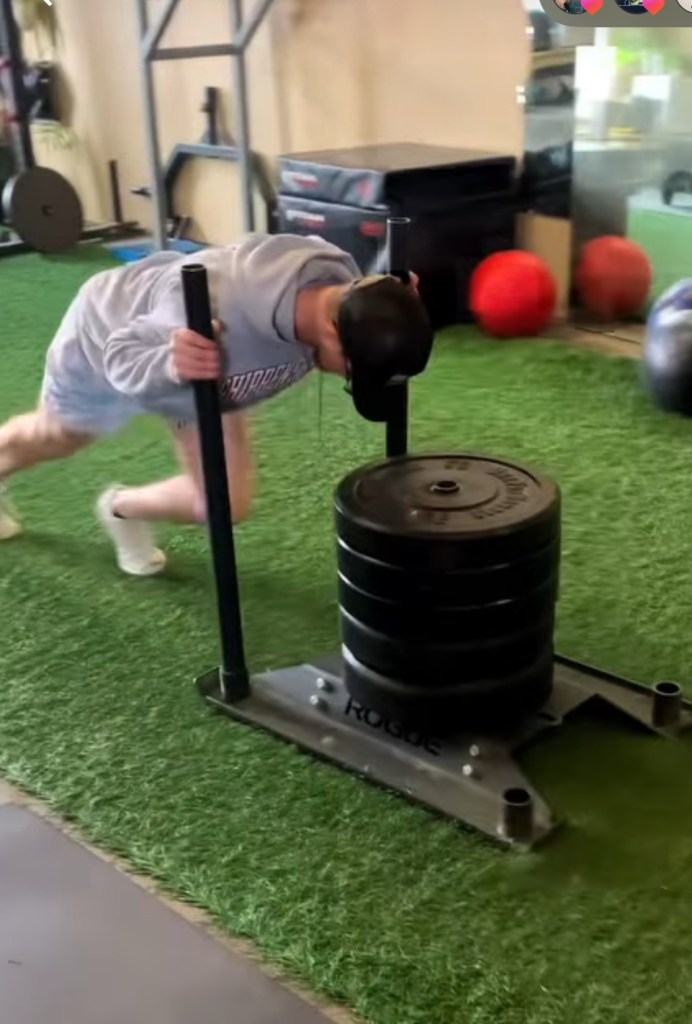
When you think of sled pushes, your mind might immediately go to elite athletes, CrossFitters or bodybuilders. The grueling push down the gym floor, heart racing, muscles burning, sweat pouring—it’s hard to ignore that sled pushes look like something reserved for the hardcore. The truth is sled pushes aren’t just for these people—they can be for everyone. Whether you’re a fitness newbie or an experienced gym goer, the sled push is a powerful tool that can provide major benefits for your strength, conditioning, and overall health. So why should everyone incorporate sled pushes into their routine? Let’s break it down.
Unilateral Strength Development
One of the key benefits of sled pushes is that they are inherently unilateral, meaning they work one side of the body at a time. While you’re pushing the sled, your body requires a great deal of stabilization while pushing off one leg at a time. This movement pattern helps develop unilateral strength, training each leg independently. Unilateral exercises are incredibly valuable because they help address imbalances between sides, which often go unnoticed during exercises like deadlifts and squats. With sleds, each leg must push the sled forward, and the body works to maintain stability and balance. Over time, this helps improve coordination, strength, and symmetry between both sides of your body.
Strength and Hypertrophy Gains
Sled pushes can be used to build both strength and hypertrophy, depending on how you program them. For strength, increase the sled’s weight and perform shorter distance pushes with more intensity. This challenges your muscles to work at maximal effort, helping to increase lower-body strength, particularly in the glutes, quads, and hamstrings. Conversely, for hypertrophy, lighter weights and longer distance leads to greater time under tension, triggering muscle growth and endurance. The versatility of sled pushes allows for a wide range of training outcomes. Whether your goal is to get stronger or build muscle, sled pushes can be incorporated into strength training or hypertrophy programs, offering a dynamic way to target multiple fitness objectives at once.
Low-Impact Exercise & Injury Prevention
One major advantage of sled pushes is that they place minimal strain on your joints compared to traditional lifts like your squats and deadlifts. This makes them an excellent option for those concerned about joint health, or for anyone with a history of low back or knee injuries. Sled pushes offer a low-impact workout that still targets key muscle groups. They help strengthen muscles around the hips, knees, and ankles, improving lower-body stability and reducing the risk of injury, or reinjury in the case of pre-existing conditions.
Cardiovascular Conditioning
Sled pushes offer a great cardiovascular workout, challenging both your heart and lungs simultaneously building muscle. Whether you’re pushing heavy weight for short distance or lighter loads for longer distances, sled pushes improve aerobic capacity and endurance. The combination of strength and conditioning also makes them effective for fat loss, as they increase calorie expenditure and boosts overall fitness.
Functional Training for Everyday Life
The sled push is a functional movement that mimics real-life actions like walking, running, and pushing or moving objects, making it ideal for improving functional strength. By engaging key muscle groups, including the core, glutes, and legs, sled pushes enhance mobility and make daily tasks easier, such as moving furniture around or doing yard work outside. This makes it a valuable exercise for people looking to improve their ability to perform day-to-day activities with less effort.
Full-Body Activation
Though primarily a lower-body exercise, sled pushes engage nearly every muscle group in the body. As your legs drive the sled, your core works to stabilize your body, and your upper body helps maintain control and balance whilst pushing. This full-body engagement makes sled pushes an efficient exercise for building strength and improving overall body conditioning, all in a short period of time.
Time Efficiency
Sled pushes are an incredibly time-efficient way to get a full-body workout. They combine strength, conditioning, and endurance into one powerful exercise, making them perfect for anyone with limited time in the gym. The ability to adjust weight and intensity also makes sled pushes versatile for different foals, allowing you to achieve a comprehensive workout in a fraction of the time.
Why Sled Pushes So Challenging?
Sled pushes are incredibly challenging because they engage multiple muscle groups simultaneously while demanding both strength and endurance. The constant pushing against the resistance forces your legs to work hard, while your core stabilizes your body, and your upper body helps maintain balance. The full-body engagement, combined with the high intensity of the exercise, forces your cardiovascular system to work overtime. Additionally, the low-impact nature of the movement doesn’t give you much of a break, making it a brutal yet effective way to build power, speed, and stamina. This combination of strength, stability, and conditioning makes sled pushes a tough but rewarding workout.
Final Thoughts
Sled pushes are a dynamic, full-body exercise that can enhance strength, muscle growth, cardiovascular fitness, and injury prevention. Whether you’re focused on improving athletic performance or simply getting stronger and more functional in daily life, sled pushes are an effective and time-efficient addition to any fitness routine. Next time you hit the gym, give the sled a try—you’ll be surprised at how much it can transform your fitness journey.
In a world overflowing with distractions and constant demands, it’s more important than ever to recognize that your energy—your mental, emotional, and physical resource—is finite. Every day, we encounter countless decisions that can either propel us toward our goals or drain us of the vitality needed to achieve them. The good news? By being selective and protective of how you invest your energy, you can transform your life one positive habit at a time.
Recognize the Finite Nature of Your Energy
Your energy is like a bank account with a limited balance. Each decision, interaction, and moment of focus either deposits into or withdraws from that account. When you engage in activities that don’t serve your purpose or align with your long-term goals, you deplete the resources needed to grow—physically, financially, spiritually, and mentally. Recognizing that you only have so much energy is the first step toward making more mindful choices.
Ask yourself: Are my daily behaviors moving me closer to where I want to be? If not, it’s time to recalibrate.
Evaluate and Transform Your Daily Behaviors
Modify What Doesn’t Serve You
The first step in protecting your energy is to identify behaviors and decisions that aren’t positively impacting your direction in life. Instead of letting these habits dictate your mood or productivity, convert them into activities that uplift and propel you forward. For example:
• Replace Doom-Scrolling with Nature Walks:
Political news and negative media can create a sense of overwhelm and hopelessness. Instead of spending hours scrolling through distressing headlines, try stepping outside for a walk in the woods. Nature offers a refreshing escape, recharging your mental clarity and easing stress.
• Swap Impulsive Spending with Conscious Choices:
If financial instability is a concern—especially if you’re buried in debt and lack tangible assets—small everyday actions matter. Instead of ordering food last minute via delivery apps, create a grocery list and meal plan. This not only saves money but also instills discipline and healthier habits.
• Trade Passive Entertainment for Growth:
When you find yourself binge-watching endless episodes of a TV show like Yellowstone, consider shifting that time to activities that nurture your mind. Meditate, read a book, or explore a hobby that challenges you intellectually or creatively. These activities help you build skills and resilience.
Prioritize Positive Inputs
Every input you allow into your life—be it media consumption, conversations, or even the company you keep—affects your energy balance. Instead of filling your day with negativity or trivial distractions, be intentional about what you expose yourself to. Positive inputs include:
• Educational Content: Books, podcasts, or courses that broaden your perspective.
• Mindfulness Practices: Meditation or movement can enhance your mental clarity and emotional well-being.
• Meaningful Relationships: Engage with people who support your growth and challenge you to be your best self.
By curating your daily environment, you’ll find that small changes begin to compound over time, leading to significant improvements in your overall quality of life.
The Power of Incremental Change
It’s Not All or Nothing
One of the most common misconceptions is that improving your life requires a complete overhaul overnight. In reality, positive daily habits—no matter how small—can have a monumental impact over the long run. Think of it as compound interest for your well-being. Each mindful decision, every moment of clarity, and every intentional action adds up, forming the foundation for lasting change.
• Consistency Over Perfection:
You don’t need to reinvent your entire life in a single day. Focus on consistent, manageable changes. Whether it’s a daily walk, a dedicated time for reading, or a food log, every bit of progress contributes to your future success.
• Celebrate Small Wins:
Recognize and celebrate the incremental improvements. Acknowledge that choosing a healthier meal or spending an hour away from negative media is a victory. These small wins build momentum and motivate you to keep pushing forward.
Letting the Small Changes Compound
Over time, the cumulative effect of these small, positive changes can transform your life dramatically. Imagine each good habit as a seed planted in fertile soil. With consistent care and attention, these seeds grow, intertwining to create a robust, resilient tree. Your daily habits, when nurtured, lead to a macro change—a complete life transformation that becomes evident over decades.
• Long-Term Vision:
Keep your eyes on the long-term vision. Remind yourself why you’re making these changes. Whether it’s financial freedom, improved physical health, or spiritual peace, let your vision be the guiding light that motivates every decision.
• Resilience Through Adaptation:
Life is unpredictable, and setbacks are inevitable. The key is to remain resilient and adaptable. When you find yourself slipping into old habits, re-evaluate your choices and gently steer yourself back toward positive actions. Every setback is an opportunity to learn and grow stronger.
Cultivating a Life Aligned with Your Goals
Invest in What Truly Matters
Your energy is best spent on activities and relationships that align with your values and aspirations. Instead of scattering your focus on every fleeting distraction, invest in what builds you up.
• Physical Health:
Commit to regular movement, strength training, balanced nutrition, and sufficient rest. A healthy body fuels a healthy mind, enabling you to tackle challenges with vigor.
• Financial Responsibility:
Whether it’s budgeting, saving, investing, or learning new skills to boost your income, every financial decision should support your long-term security and growth.
• Spiritual and Mental Growth:
Engage in practices that nourish your soul and mind. This might include meditation, journaling, or even connecting with a community that shares your spiritual values.
Redirect Your Focus to Create a Positive Ripple Effect
By shifting your focus from negativity to proactive, meaningful actions, you set in motion a ripple effect that extends beyond your personal well-being. As you protect and wisely invest your energy, you inspire those around you to do the same. The collective impact of many individuals making small, positive changes can lead to a significant transformation in our communities, and eventually, in the broader world.
A Journey Worth Taking
Your energy is precious and finite—a resource that must be guarded and nurtured. Instead of succumbing to the pull of negative influences and fleeting distractions, choose to invest in your growth. Whether that means swapping mindless scrolling for a rejuvenating walk in nature, or replacing impulsive spending with mindful budgeting, every choice counts.
Remember, progress isn’t about making drastic changes overnight. It’s about the cumulative effect of daily habits that slowly but surely build the life you desire. Prioritize positive inputs, celebrate every small win, and let the power of incremental change shape a future where your energy is used to its fullest potential.
Every journey begins with a single step. Today, choose to protect your energy and set yourself on the path to a more fulfilling, balanced, and purpose-driven life.






 Sports Performance and Private Training