We all face challenges in the gym and in life—plateaus, injuries, setbacks, self-doubt. In these moments, it’s easy to slip into a victim mindset, asking, “Why is this happening to me?” But what if we reframed the question? What if, instead, we asked, “What is this teaching me?”
This simple shift in perspective can be a game-changer. It transforms adversity from something that happens to us into something that happens for us. Instead of feeling powerless, we gain agency. Instead of frustration, we find opportunity. This mindset pivot isn’t just about getting stronger in the gym—it’s about getting stronger in life.
The Gym as a Testing Ground
The gym is a controlled environment where we face adversity on a daily basis. The weight doesn’t care how tired you are, how bad your day was, or whether you feel like showing up. Some days, the bar moves easily. Other days, it feels like it’s glued to the floor.
If your mindset is stuck on “Why am I struggling today?” it’s easy to feel defeated. But when you shift to “What is this teaching me?” you start looking for lessons:
• A tough workout teaches patience. Progress isn’t always linear, but consistency pays off.
• A strength plateau teaches strategy. Maybe it’s time to adjust programming, recovery, or nutrition.
• An injury teaches resilience. It forces us to focus on mobility, form, and long-term health.
Every challenge in the gym has the potential to make us better, but only if we’re willing to look for the lesson.
Applying This Mindset to Life
The real magic happens when you take this mindset outside the gym. Life throws curveballs just like training does—unexpected hardships, failures, and moments of doubt.
• Did you lose a job opportunity? Instead of asking, “Why me?” ask, “What can I learn from this?” Maybe it’s a chance to refine your skills, explore a new path, or build resilience.
• Did a personal setback knock you down? Rather than seeing it as unfair, see it as a teacher. What wisdom can you take forward?
• Are you struggling with motivation? Instead of feeling stuck, ask what this phase is revealing about your habits, mindset, and environment.
Growth happens when we stop seeing obstacles as roadblocks and start viewing them as lessons. Every struggle carries wisdom—if we’re willing to listen.
The Challenge: Reframe Your Next Struggle
The next time you hit a wall—whether in the gym or in life—catch yourself before frustration takes over. Pause. Then, instead of asking, “Why is this happening to me?” deliberately shift to “What is this teaching me?”
This small shift has the power to change everything. It turns struggle into strength, frustration into wisdom, and setbacks into stepping stones. And over time, it builds not just a stronger body, but a stronger mind.
Try it. Your future self—both in and out of the gym—will thank you.
When you think of sled pushes, your mind might immediately go to elite athletes, CrossFitters or bodybuilders. The grueling push down the gym floor, heart racing, muscles burning, sweat pouring—it’s hard to ignore that sled pushes look like something reserved for the hardcore. The truth is sled pushes aren’t just for these people—they can be for everyone. Whether you’re a fitness newbie or an experienced gym goer, the sled push is a powerful tool that can provide major benefits for your strength, conditioning, and overall health. So why should everyone incorporate sled pushes into their routine? Let’s break it down.
Unilateral Strength Development
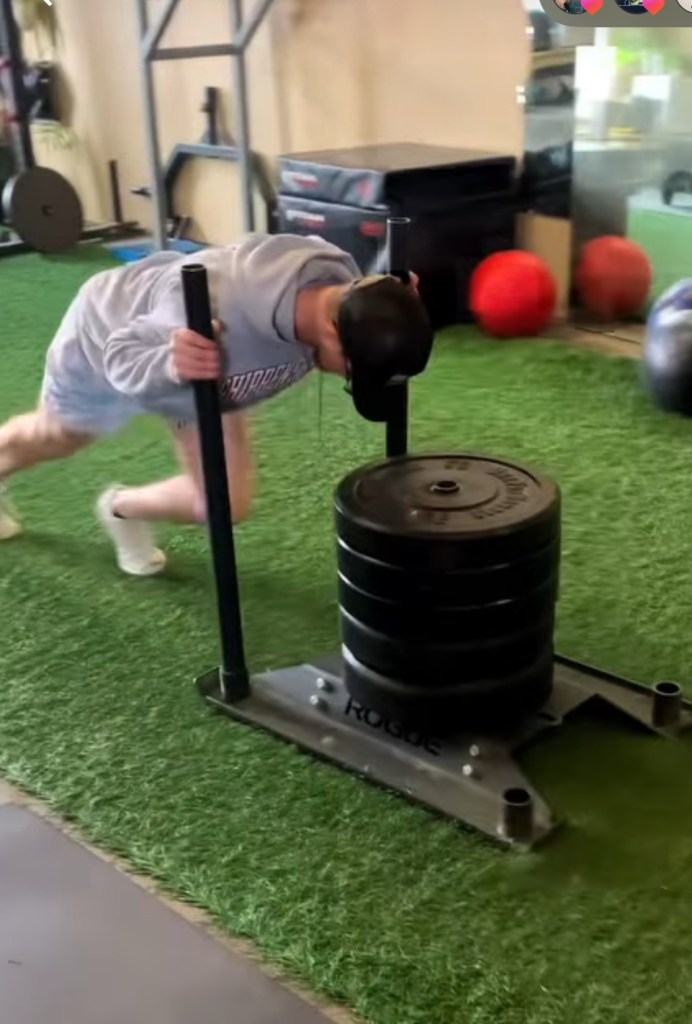
One of the key benefits of sled pushes is that they are inherently unilateral, meaning they work one side of the body at a time. While you’re pushing the sled, your body requires a great deal of stabilization while pushing off one leg at a time. This movement pattern helps develop unilateral strength, training each leg independently. Unilateral exercises are incredibly valuable because they help address imbalances between sides, which often go unnoticed during exercises like deadlifts and squats. With sleds, each leg must push the sled forward, and the body works to maintain stability and balance. Over time, this helps improve coordination, strength, and symmetry between both sides of your body.
Strength and Hypertrophy Gains
Sled pushes can be used to build both strength and hypertrophy, depending on how you program them. For strength, increase the sled’s weight and perform shorter distance pushes with more intensity. This challenges your muscles to work at maximal effort, helping to increase lower-body strength, particularly in the glutes, quads, and hamstrings. Conversely, for hypertrophy, lighter weights and longer distance leads to greater time under tension, triggering muscle growth and endurance. The versatility of sled pushes allows for a wide range of training outcomes. Whether your goal is to get stronger or build muscle, sled pushes can be incorporated into strength training or hypertrophy programs, offering a dynamic way to target multiple fitness objectives at once.
Low-Impact Exercise & Injury Prevention
One major advantage of sled pushes is that they place minimal strain on your joints compared to traditional lifts like your squats and deadlifts. This makes them an excellent option for those concerned about joint health, or for anyone with a history of low back or knee injuries. Sled pushes offer a low-impact workout that still targets key muscle groups. They help strengthen muscles around the hips, knees, and ankles, improving lower-body stability and reducing the risk of injury, or reinjury in the case of pre-existing conditions.
Cardiovascular Conditioning
Sled pushes offer a great cardiovascular workout, challenging both your heart and lungs simultaneously building muscle. Whether you’re pushing heavy weight for short distance or lighter loads for longer distances, sled pushes improve aerobic capacity and endurance. The combination of strength and conditioning also makes them effective for fat loss, as they increase calorie expenditure and boosts overall fitness.
Functional Training for Everyday Life
The sled push is a functional movement that mimics real-life actions like walking, running, and pushing or moving objects, making it ideal for improving functional strength. By engaging key muscle groups, including the core, glutes, and legs, sled pushes enhance mobility and make daily tasks easier, such as moving furniture around or doing yard work outside. This makes it a valuable exercise for people looking to improve their ability to perform day-to-day activities with less effort.
Full-Body Activation
Though primarily a lower-body exercise, sled pushes engage nearly every muscle group in the body. As your legs drive the sled, your core works to stabilize your body, and your upper body helps maintain control and balance whilst pushing. This full-body engagement makes sled pushes an efficient exercise for building strength and improving overall body conditioning, all in a short period of time.
Time Efficiency
Sled pushes are an incredibly time-efficient way to get a full-body workout. They combine strength, conditioning, and endurance into one powerful exercise, making them perfect for anyone with limited time in the gym. The ability to adjust weight and intensity also makes sled pushes versatile for different foals, allowing you to achieve a comprehensive workout in a fraction of the time.
Why Sled Pushes So Challenging?
Sled pushes are incredibly challenging because they engage multiple muscle groups simultaneously while demanding both strength and endurance. The constant pushing against the resistance forces your legs to work hard, while your core stabilizes your body, and your upper body helps maintain balance. The full-body engagement, combined with the high intensity of the exercise, forces your cardiovascular system to work overtime. Additionally, the low-impact nature of the movement doesn’t give you much of a break, making it a brutal yet effective way to build power, speed, and stamina. This combination of strength, stability, and conditioning makes sled pushes a tough but rewarding workout.
Final Thoughts
Sled pushes are a dynamic, full-body exercise that can enhance strength, muscle growth, cardiovascular fitness, and injury prevention. Whether you’re focused on improving athletic performance or simply getting stronger and more functional in daily life, sled pushes are an effective and time-efficient addition to any fitness routine. Next time you hit the gym, give the sled a try—you’ll be surprised at how much it can transform your fitness journey.
When it comes to training, you’ve likely encountered both free weights and machines at the gym, and each has its own benefits. However, if you want to maximize strength, muscle growth, and overall fitness, free weights are generally the better choice in the long run. Let’s take a closer look at both options and explore why free weights are the superior option for many.
Free weights offer a significant advantage in that they engage more muscle groups compared to machines. When you lift free weights, your body must stabilize the weight, activating not just the primary target muscles but also your stabilizer muscles. This results in a more comprehensive workout, developing not just strength but also coordination and balance. Furthermore, free weights replicate natural movements, such as squatting or pressing which are like movements we perform in our daily lives. This is what makes free weights so effective for improving functional strength—the kind of strength that helps you perform better in everyday activities. Additionally, because free weights allow for a greater range of motion, they tend to activate muscles more effectively and improve mobility. As you lift, your body moves through a more natural motion, which can help prevent injury over time.
Another benefit of free weights is the increased calorie burn. Due to the increased coordination and muscle activation in each exercise, they demand more energy than machines, thus burning more calories. However, free weights do come with a learning curve. For beginners, the lack of guided movement paths can be intimidating, and if not performed correctly, there is a chance of injury. It also requires more focus and control, especially when using heavier weights. But these challenges are part of the reason free weights ultimately deliver better results. As your skill and form improve, you’ll be building not just physical strength, but also mental focus and discipline.
On the other hand, machines are often easier for beginners or those looking to isolate specific muscle groups. Machines offer built in support and fixed movement paths, which can help guide you through exercises. This makes machines a safe choice, especially those recovering from an injury or new to weight training. Additionally, machines are great for isolating muscles, which can be useful for bodybuilders. However, they don’t offer the functional benefits free weights do. Machines limit your range of motion and restrict the natural movement patterns your body uses in real-life activities. While they are efficient for targeting specific muscles, they don’t build the type of overall strength needed for better coordination, athletic performance, and functionality.
In the long run, free weights are the more effective choice for building strength, improving functional fitness, and enhancing you coordination and balance. They may require more effort and a focus on technique initially, but the benefits—greater muscle activation, improved balance, and a more comprehensive strength building experience—far outweigh the ease of using machines. By incorporating free weights into your training routine, you’ll not only get stronger but also develop a well-rounded foundation that can enhance your performance both in and out of the gym. So, while both can play a role in a balanced workout program, free weights should be your go-to for long-term results.
In a world overflowing with distractions and constant demands, it’s more important than ever to recognize that your energy—your mental, emotional, and physical resource—is finite. Every day, we encounter countless decisions that can either propel us toward our goals or drain us of the vitality needed to achieve them. The good news? By being selective and protective of how you invest your energy, you can transform your life one positive habit at a time.
Recognize the Finite Nature of Your Energy
Your energy is like a bank account with a limited balance. Each decision, interaction, and moment of focus either deposits into or withdraws from that account. When you engage in activities that don’t serve your purpose or align with your long-term goals, you deplete the resources needed to grow—physically, financially, spiritually, and mentally. Recognizing that you only have so much energy is the first step toward making more mindful choices.
Ask yourself: Are my daily behaviors moving me closer to where I want to be? If not, it’s time to recalibrate.
Evaluate and Transform Your Daily Behaviors
Modify What Doesn’t Serve You
The first step in protecting your energy is to identify behaviors and decisions that aren’t positively impacting your direction in life. Instead of letting these habits dictate your mood or productivity, convert them into activities that uplift and propel you forward. For example:
• Replace Doom-Scrolling with Nature Walks:
Political news and negative media can create a sense of overwhelm and hopelessness. Instead of spending hours scrolling through distressing headlines, try stepping outside for a walk in the woods. Nature offers a refreshing escape, recharging your mental clarity and easing stress.
• Swap Impulsive Spending with Conscious Choices:
If financial instability is a concern—especially if you’re buried in debt and lack tangible assets—small everyday actions matter. Instead of ordering food last minute via delivery apps, create a grocery list and meal plan. This not only saves money but also instills discipline and healthier habits.
• Trade Passive Entertainment for Growth:
When you find yourself binge-watching endless episodes of a TV show like Yellowstone, consider shifting that time to activities that nurture your mind. Meditate, read a book, or explore a hobby that challenges you intellectually or creatively. These activities help you build skills and resilience.
Prioritize Positive Inputs
Every input you allow into your life—be it media consumption, conversations, or even the company you keep—affects your energy balance. Instead of filling your day with negativity or trivial distractions, be intentional about what you expose yourself to. Positive inputs include:
• Educational Content: Books, podcasts, or courses that broaden your perspective.
• Mindfulness Practices: Meditation or movement can enhance your mental clarity and emotional well-being.
• Meaningful Relationships: Engage with people who support your growth and challenge you to be your best self.
By curating your daily environment, you’ll find that small changes begin to compound over time, leading to significant improvements in your overall quality of life.
The Power of Incremental Change
It’s Not All or Nothing
One of the most common misconceptions is that improving your life requires a complete overhaul overnight. In reality, positive daily habits—no matter how small—can have a monumental impact over the long run. Think of it as compound interest for your well-being. Each mindful decision, every moment of clarity, and every intentional action adds up, forming the foundation for lasting change.
• Consistency Over Perfection:
You don’t need to reinvent your entire life in a single day. Focus on consistent, manageable changes. Whether it’s a daily walk, a dedicated time for reading, or a food log, every bit of progress contributes to your future success.
• Celebrate Small Wins:
Recognize and celebrate the incremental improvements. Acknowledge that choosing a healthier meal or spending an hour away from negative media is a victory. These small wins build momentum and motivate you to keep pushing forward.
Letting the Small Changes Compound
Over time, the cumulative effect of these small, positive changes can transform your life dramatically. Imagine each good habit as a seed planted in fertile soil. With consistent care and attention, these seeds grow, intertwining to create a robust, resilient tree. Your daily habits, when nurtured, lead to a macro change—a complete life transformation that becomes evident over decades.
• Long-Term Vision:
Keep your eyes on the long-term vision. Remind yourself why you’re making these changes. Whether it’s financial freedom, improved physical health, or spiritual peace, let your vision be the guiding light that motivates every decision.
• Resilience Through Adaptation:
Life is unpredictable, and setbacks are inevitable. The key is to remain resilient and adaptable. When you find yourself slipping into old habits, re-evaluate your choices and gently steer yourself back toward positive actions. Every setback is an opportunity to learn and grow stronger.
Cultivating a Life Aligned with Your Goals
Invest in What Truly Matters
Your energy is best spent on activities and relationships that align with your values and aspirations. Instead of scattering your focus on every fleeting distraction, invest in what builds you up.
• Physical Health:
Commit to regular movement, strength training, balanced nutrition, and sufficient rest. A healthy body fuels a healthy mind, enabling you to tackle challenges with vigor.
• Financial Responsibility:
Whether it’s budgeting, saving, investing, or learning new skills to boost your income, every financial decision should support your long-term security and growth.
• Spiritual and Mental Growth:
Engage in practices that nourish your soul and mind. This might include meditation, journaling, or even connecting with a community that shares your spiritual values.
Redirect Your Focus to Create a Positive Ripple Effect
By shifting your focus from negativity to proactive, meaningful actions, you set in motion a ripple effect that extends beyond your personal well-being. As you protect and wisely invest your energy, you inspire those around you to do the same. The collective impact of many individuals making small, positive changes can lead to a significant transformation in our communities, and eventually, in the broader world.
A Journey Worth Taking
Your energy is precious and finite—a resource that must be guarded and nurtured. Instead of succumbing to the pull of negative influences and fleeting distractions, choose to invest in your growth. Whether that means swapping mindless scrolling for a rejuvenating walk in nature, or replacing impulsive spending with mindful budgeting, every choice counts.
Remember, progress isn’t about making drastic changes overnight. It’s about the cumulative effect of daily habits that slowly but surely build the life you desire. Prioritize positive inputs, celebrate every small win, and let the power of incremental change shape a future where your energy is used to its fullest potential.
Every journey begins with a single step. Today, choose to protect your energy and set yourself on the path to a more fulfilling, balanced, and purpose-driven life.
As a fitness coach, one of the most common concerns you hear is the desire to see immediate weight loss results on the scale. It’s easy to fall into the trap of thinking that a lower number equals success, but the truth is, progress isn’t always reflected in the numbers on the digital screen. There are so many other ways to measure improvement, and it’s important to broaden your perspective on what progress may look like.
One of the most noticeable signs of progress is an increase in strength and endurance. Maybe you started out struggling with squats or couldn’t run a mile without feeling winded, but now you’re confidently lifting more weight or completing your workout with more energy. These gains are often not seen immediately on the scale, but they show significant progress in your fitness journey. Improved strength means your body is becoming more efficient at handling physical tasks, which is a huge win!
Exercise has a powerful impact on mental well-being, yet this progress is often overlooked. You may feel less stressed, more energized, or simply in a better mood after a workout. Exercise can boost endorphins, the brains “feel-good” chemicals, and over time, you may notice that your mental clarity and emotional stability improve. These are signs of progress that are just as important as physical changes and should never be underestimated. These mental changes allow you to show up not just in your workouts more frequently, but in your life as a whole.
In addition to strength and mood improvements, changes in body composition are another key indicator of progress. As you build muscle and burn fat, your body may become leaner and more toned, even if your weight remains the same or fluctuates slightly. Muscle mass is denser than fat, so while the scale might not budge, your body’s shape and how your clothes fit can show significant changes. Moreover, muscle burns more calories at rest than fat, meaning that even when you’re not working out, your body is becoming more efficient at burning energy. This helps to increase your metabolism over time, offering long-term benefits that go far beyond just looking leaner.
Regular exercise can promote deeper, more restful sleep, which in turn boosts recovery, energy levels, and overall well-being. When you wake up feeling more rested and alert, it’s a clear indication that your body is responding to the changes you’re making in your fitness routine. Sleep is a powerful tool in your fitness journey, don’t disregard its importance.
The scale may be an easy and familiar way to track progress, but it’s far from the only measure of success. Strength gains, mental well-being, body composition and improved sleep all contribute to a healthier, stronger version of yourself. Embrace these non-scale victories and remember that true progress is about how you feel, how you perform, and how you’ve transformed both inside and out.
We all want results in the gym—more strength, better endurance, a leaner physique. But the truth is, the progress we crave doesn’t come from doing what’s easy. It comes from doing what we resist. The exercises we avoid, the disciplines we neglect, and the challenges we sidestep are often the exact things that would unlock our greatest potential.
Facing the Hard Stuff
Think about the movement you dread the most. Maybe it’s squats because they expose your weakness in the legs. Maybe it’s deadlifts because they demand total-body effort. Or perhaps it’s high intensity intervals because it pushes your lungs and heart to their limits. Whatever it is, avoiding these movements is also avoiding the results they bring.
That’s where the “magic” lies. Not in the comfortable routines or the easy workouts, but in the struggle. Strength, endurance, and transformation don’t come from playing it safe—they come from embracing the work that feels hardest.
Why We Avoid Certain Workouts
Avoidance in the gym often stems from three things:
1. Discomfort – It’s human nature to resist pain and fatigue. But growth requires discomfort. Every rep that burns, every weight that feels heavy, and every sled push that makes your lungs scream is forging a stronger version of you.
2. Weakness Exposure – It’s humbling to confront our weak points. If you struggle with pull-ups, you might be tempted to skip them. But by working through that weakness, you build true strength.
3. Fear of Failure – No one wants to look weak, slow, or inexperienced. But failing is part of the process. The strongest lifters, fastest runners, and most skilled athletes all started as beginners who struggled.
Lean Into the Resistance
Instead of avoiding the tough stuff, challenge yourself to face it head-on. If mobility work is your weak point, commit to improving it. If heavy lifts intimidate you, start light and build up. If conditioning gasses you out, make it a priority. Over time, the things that once felt impossible will become your strengths.
The magic isn’t in the shortcuts or hacks—it’s in the hard, unglamorous work. So the next time you find yourself dodging a movement or dreading a workout, remember: that’s exactly where the real progress is waiting.
Lean into the resistance. That’s where transformation happens.
Many athletes make the mistake of focusing solely on off-season training, believing that once the season begins, their time in the weight room should take a backseat. While recovery and sport-specific skill work are essential, abandoning strength training during the season can lead to decreased performance, increased injury risk, and long-term setbacks. Consistent in-season training isn’t just about maintaining gains—it’s about maximizing durability, optimizing recovery, and setting yourself up for long-term athletic success.
Staying Strong and Durable During a Tough Season
A competitive season is physically demanding, placing high levels of stress on the body through repetitive movements, collisions, and constant high-intensity efforts. Without strength training, athletes gradually lose muscle mass, power, and resilience, leaving them more vulnerable to fatigue and injury.
A well-structured in-season program doesn’t mean lifting maximal loads with high volume multiple times per week. Instead, it focuses on maintaining strength, reinforcing movement patterns, and preventing imbalances caused by sport-specific movements. Movements like trap bar deadlifts, Bulgarian split squats, and loaded carries help athletes stay strong while avoiding excessive wear and tear.
Additionally, in-season training enhances joint integrity, reinforces tendon and ligament strength, and supports overall durability. By continuing to train, athletes can better withstand the grind of a full season and avoid the common breakdowns that occur late in the year.
Long-Term Athletic Development: A Higher Ceiling Over 4–8 Years
Athletic development isn’t measured in months—it’s built over years. When athletes only train during a short off-season window, they significantly limit their long-term potential. Those who consistently train year-round, even at a reduced volume during the season, experience cumulative benefits that compound over time.
Over a four-to-eight-year period, athletes who remain committed to in-season training:
• Develop a higher strength ceiling – Instead of losing gains every season and rebuilding in the off-season, they continually progress, leading to superior performance.
• Enhance neuromuscular efficiency – Staying active in the weight room improves coordination between the nervous system and muscles, increasing power output in competition.
• Reduce injury setbacks – Avoiding prolonged strength losses means fewer soft tissue injuries, fewer missed games, and less time spent in rehab instead of training.
• Improve longevity – Whether an athlete wants to play professionally or simply stay active post-competition, maintaining a strong, resilient body extends their ability to perform at a high level.
When you think long-term, the athletes who consistently train—regardless of the season—are the ones who separate themselves from the competition.
Additional Benefits: Blood Flow, Recovery, and Mental Focus
Strength training isn’t just about maintaining muscle—it also plays a key role in recovery and performance longevity. Light to moderate resistance training stimulates blood flow, which helps deliver oxygen and nutrients to muscles while flushing out metabolic waste. This process aids in recovery and reduces soreness, keeping athletes fresher throughout the season.
In-season training also serves as a mental reset. The weight room provides a controlled environment where athletes can build confidence, refine movement patterns, and break through mental barriers. Training sessions reinforce discipline and consistency, two qualities that directly translate to game-time performance.
Final Thoughts: Make Training a Year-Round Habit
The best athletes don’t train for just three months—they train year-round. A strategic in-season strength program allows athletes to maintain power, prevent injuries, and develop long-term potential without over taxing their bodies. The key is adjusting volume and moderating intensity to complement the demands of the season while keeping the body primed for peak performance.
If you’re serious about excelling in your sport, don’t hit pause on training when the season starts. Stay committed, stay strong, and build a foundation that will carry you through not just this season, but your entire athletic career.
Starting out in the gym can feel like stepping into a battlefield, where you’re David staring up at the Goliath of long-term fitness. The weights seem too heavy, the progress feels too slow, and the results you want seem impossibly far away. But here’s the truth—if you want to get stronger and healthier, you have to commit to playing the long game.
Lock Down a Plan and Build Discipline
The most important step in any journey is creating a plan and sticking to it. Without a structured approach, every workout can feel aimless, and motivation will fade fast. Choose a program that aligns with your goals, whether it’s strength, endurance, or overall health. Then, commit to executing that plan with discipline—not just when you feel like it, but especially when you don’t.
Discipline is what separates those who see real, lasting results from those who start strong but burn out. It’s not about motivation; motivation is fleeting. Some days you’ll feel fired up to train, and other days you’ll want to skip the gym entirely. The key is to show up regardless. Treat each workout as a non-negotiable appointment with yourself.
Be Patient with Your Daily Actions
Progress in the gym isn’t measured in days or weeks—it’s measured in years. Strength and health are built through thousands of small, seemingly insignificant choices made day after day. Hitting your workouts, eating quality food, getting enough sleep, and managing stress—these habits compound over time, even when you don’t see immediate results.
Think of it like stacking bricks. Each session in the gym, every healthy meal, and every night of good sleep adds another brick to your foundation. Some days, you might not notice a difference. Some weeks, it might feel like nothing is changing. But give it a few months, a year, or five years, and you’ll look back and be amazed at what you’ve built.
Trust the Process—Your Future Self Will Thank You
The strongest people in the gym aren’t the ones who trained the hardest for a month. They’re the ones who kept showing up for years. Strength isn’t given; it’s earned through consistency and patience. The strength and fitness you build today will determine the quality of your life years from now.
So, commit to the long game. Take the pressure off yourself to see instant results. Focus on executing small, daily actions that move you forward. One day, you’ll look back and be grateful that you stayed the course.
Keep stacking those bricks. Keep playing the long game. Your future self is counting on you.
When it comes to squats, one thing is clear: no two squats look the same, nor should they. Biomechanics—specifically the lengths of your femurs, torso, and other body segments—play a significant role in how your squat looks and feels. To perform a high-quality squat, the key is keeping the barbell balanced over the midfoot throughout the movement. However, achieving that balance will look different for everyone, depending on their unique body structure.
Instead of forcing everyone to fit into a cookie-cutter squat with generic cues, let’s take an individualized approach to help you develop the best squat for YOUR body.
The Role of Biomechanics in Squat Mechanics
Long Femurs
If you have long femurs relative to your torso, you’ll naturally find squats more challenging, particularly when it comes to maintaining an upright torso. Your femurs will push your hips further back, creating a greater forward lean to keep the barbell balanced over your midfoot.
For long-femured lifters:
• Optimal Squat Style: Low-bar back squats tend to feel more natural, as they allow for a more forward torso lean and reduce strain on your lower back.
• Stance Tips: A slightly wider stance with feet turned out can help you open your hips and reduce the forward lean.
• Mobility Work: Focus on hip and ankle mobility to maintain depth without rounding your lower back.
Short Femurs
Short femurs make squatting look effortless. Lifters with this proportion can maintain a more upright torso, even in a deep squat, as their hips don’t need to travel as far back.
For short-femured lifters:
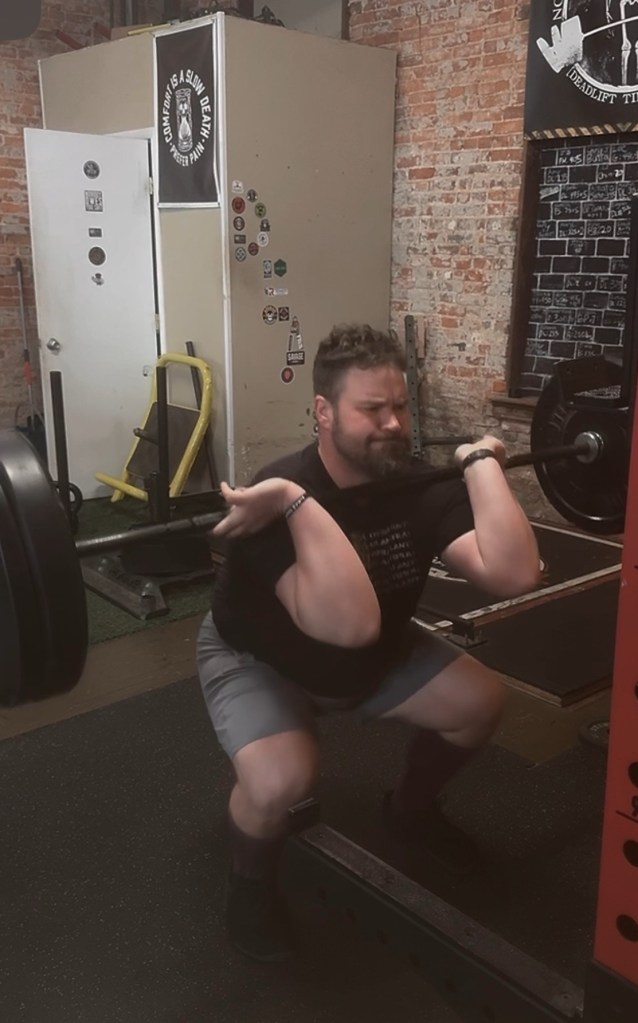
• Optimal Squat Style: High-bar back squats or front squats work well, as the upright position feels more natural.
• Stance Tips: A shoulder-width stance often works best, but adjust based on comfort and hip mobility.
• Strength Focus: Prioritize quads and core strength to maximize performance and stability in this position.
Long Torso
A long torso allows for a more upright squat position, as the center of gravity stays closer to the midfoot. However, this proportion can place more stress on the lower back if not managed properly.
For long-torso lifters:
• Optimal Squat Style: High-bar back squats or front squats are ideal, as they complement the upright position.
• Stance Tips: Experiment with stance width, as mobility and comfort will determine the best positioning.
• Mobility Work: Strengthen your posterior chain and work on thoracic spine mobility to maintain a strong, neutral position under heavy loads.
Short Torso
Lifters with short torsos often find it challenging to remain upright, particularly if paired with long femurs. They’ll naturally lean forward more during squats, which increases the demand on the posterior chain.
For short-torso lifters:
• Optimal Squat Style: Low-bar to mid-bar back squats are usually better suited, as they reduce the need for an upright position.
• Stance Tips: A slightly wider stance and turned-out toes can help maintain balance and depth.
• Strength Focus: Build strong glutes, hamstrings, and spinal erectors to support the forward lean.
The Key: Individualized Squats
The biggest mistake in teaching squats is relying on overused, generalized cues like “chest up” or “stay upright,” without considering individual biomechanics. A “perfect” squat for one person could look completely different for someone else.
Here’s how to develop the best squat for YOU:
1. Film Yourself: Record your squats from multiple angles to identify your natural movement patterns.
2. Experiment: Try different squat styles (high-bar, low-bar, front squats) to see what feels best.
3. Adjust Your Stance: Play with your foot placement and toe angle to find the most stable and comfortable position.
4. Focus on Mobility: Address any mobility restrictions, especially in the hips, ankles, and thoracic spine, to improve depth and alignment.
5. Seek Professional Guidance: Work with a coach who understands biomechanics and can help tailor your squat to your body’s proportions.
Stop Forcing Square Pegs Into Round Holes
Squats are not one-size-fits-all. Forcing every lifter into a standardized technique ignores the unique biomechanics that dictate how they move. Instead of trying to fit a square peg into a round hole, take an individualized approach. Focus on keeping the barbell balanced over the midfoot and adjust your squat mechanics to suit your body.
Embrace your biomechanics, train with intention, and unlock your full squatting potential. Your best squat isn’t about mimicking someone else—it’s about maximizing YOUR strength, mobility, and balance.
Starting your fitness journey can feel overwhelming with so much information out there. It’s easy to get caught up in the latest trends, fitness challenges, or the pressure to see fast results. However, as a beginner, focusing on a few foundational habits will set you up for lasting success. Rather than chasing quick fixes or complicated routines, concentrate on two to three core areas that can make a real difference: consistency in strength training, walking daily, and prioritizing sleep. Let’s dive into each one.
Consistency in Strength Training
When you’re new to strength training, the key is consistency—not intensity. Strength training is a cornerstone of any well-rounded fitness program because it builds muscle, boosts metabolism, enhances overall strength, and improves mood. As a beginner, it’s important to start slowly and gradually build up.
Two to three days a week is a great start, as it gives your body enough stimulus to adapt without overwhelming it. This is the groundwork for future progress. Many beginners get excited and try to train every day right out of the gate, but this can often lead to exhaustion or injury. A few days a week allows for proper recovery, which is essential for beginners. Going to the gym consistently—even if only for 30–45 minutes—will yield far better results than sporadic, intense sessions. The goal should be to make strength training a regular part of your routine.
As a beginner, it’s helpful to focus on compound exercises (like squats, hinging, pressing, and pulling) that target multiple muscle groups. These movements build functional strength and create a solid base for more advanced exercises later. However, before adding a bunch of weight, mastering proper technique is critical. Focus on performing exercises correctly to avoid injury and develop good movement patterns that will serve you well in the future.
Daily Walks
While strength training is essential, don’t underestimate the benefits of walking. Walking is an incredibly simple and effective way to increase daily physical activity, boost your overall fitness, and improve your health. Here’s why:
• Promotes recovery: Walking helps stimulate blood flow, which aids in muscle recovery and reduces soreness from strength training.
• Increases overall movement: If you’re working in a sedentary job or lifestyle, walking is a low-impact way to stay active without taxing your body.
• Supports weight management: Regular walking helps with calorie burning and fat loss in a sustainable way. Albeit not a lot of calories, but every step counts.
• Improves mood and reduces stress: Walking outdoors, especially in nature, can reduce anxiety and enhance your mental health.
You don’t need to aim for long, intense walks—10-20 minutes of brisk walking daily is enough to get the benefits. Consider walking after meals or as part of your routine to build it into your day.
Consistent Sleep Schedule
Sleep is arguably the most underrated aspect of fitness. While strength training breaks down muscle tissue, it’s during rest that your body repairs and builds the muscles back up. If you’re not prioritizing sleep, you’re hindering your ability to recover and perform at your best.
During deep sleep, your body releases growth hormone, which aids in muscle recovery and repair. Without proper sleep, muscle growth will be compromised. Sleep also plays a crucial role in energy levels. When well-rested, you’ll have the stamina to push harder during your workouts and stay consistent in your routine. Lastly, a consistent sleep schedule helps with mental clarity, focus, and stress management—essential elements for staying committed to your fitness journey.
How to Improve Your Sleep:
• Set a consistent bedtime and wake time: This helps regulate your internal clock. While this may not be feasible every day, aiming for 7-8 hours of sleep is key.
• Avoid screens before bed: The blue light emitted from phones, tablets, and computers can interfere with melatonin production, making it harder to fall asleep.
• Create a calming bedtime routine: Reading, stretching, or practicing mindfulness can signal to your body that it’s time to wind down.
As a beginner, the most important thing is consistency. Consistently hitting the gym 2-3 days a week, walking daily and getting adequate sleep will create a solid foundation for long-term progress. Once you’ve nailed down these habits, the next step is to focus on eating a balanced diet—primarily whole foods rich in protein and fiber. But remember, take it one step at a time. It’s not about perfection; it’s about making small, sustainable changes that will lead to big results over time. Fitness is a marathon, not a sprint. By focusing on consistency and gradual progress, you’ll set yourself up for success in the long run.
“Success is the sum of small efforts, repeated day in and day out.” – Robert Collier




 Sports Performance and Private Training