

By Cory Woolf
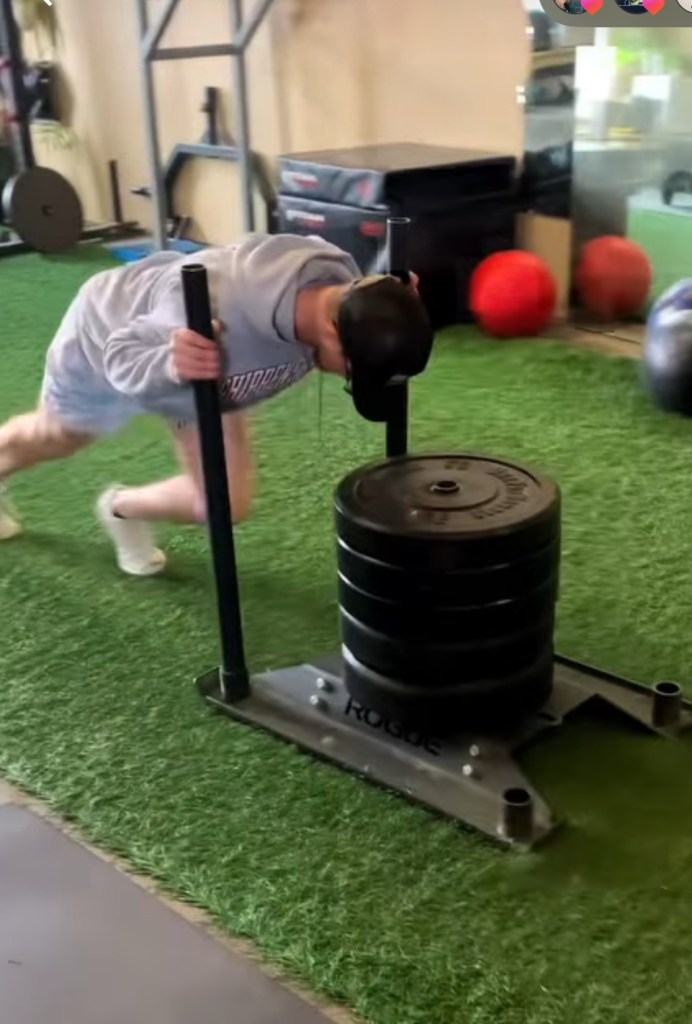
When you think of sled pushes, your mind might immediately go to elite athletes, CrossFitters or bodybuilders. The grueling push down the gym floor, heart racing, muscles burning, sweat pouring—it’s hard to ignore that sled pushes look like something reserved for the hardcore. The truth is sled pushes aren’t just for these people—they can be for everyone. Whether you’re a fitness newbie or an experienced gym goer, the sled push is a powerful tool that can provide major benefits for your strength, conditioning, and overall health. So why should everyone incorporate sled pushes into their routine? Let’s break it down.
Unilateral Strength Development
One of the key benefits of sled pushes is that they are inherently unilateral, meaning they work one side of the body at a time. While you’re pushing the sled, your body requires a great deal of stabilization while pushing off one leg at a time. This movement pattern helps develop unilateral strength, training each leg independently. Unilateral exercises are incredibly valuable because they help address imbalances between sides, which often go unnoticed during exercises like deadlifts and squats. With sleds, each leg must push the sled forward, and the body works to maintain stability and balance. Over time, this helps improve coordination, strength, and symmetry between both sides of your body.
Strength and Hypertrophy Gains
Sled pushes can be used to build both strength and hypertrophy, depending on how you program them. For strength, increase the sled’s weight and perform shorter distance pushes with more intensity. This challenges your muscles to work at maximal effort, helping to increase lower-body strength, particularly in the glutes, quads, and hamstrings. Conversely, for hypertrophy, lighter weights and longer distance leads to greater time under tension, triggering muscle growth and endurance. The versatility of sled pushes allows for a wide range of training outcomes. Whether your goal is to get stronger or build muscle, sled pushes can be incorporated into strength training or hypertrophy programs, offering a dynamic way to target multiple fitness objectives at once.
Low-Impact Exercise & Injury Prevention
One major advantage of sled pushes is that they place minimal strain on your joints compared to traditional lifts like your squats and deadlifts. This makes them an excellent option for those concerned about joint health, or for anyone with a history of low back or knee injuries. Sled pushes offer a low-impact workout that still targets key muscle groups. They help strengthen muscles around the hips, knees, and ankles, improving lower-body stability and reducing the risk of injury, or reinjury in the case of pre-existing conditions.
Cardiovascular Conditioning
Sled pushes offer a great cardiovascular workout, challenging both your heart and lungs simultaneously building muscle. Whether you’re pushing heavy weight for short distance or lighter loads for longer distances, sled pushes improve aerobic capacity and endurance. The combination of strength and conditioning also makes them effective for fat loss, as they increase calorie expenditure and boosts overall fitness.
Functional Training for Everyday Life
The sled push is a functional movement that mimics real-life actions like walking, running, and pushing or moving objects, making it ideal for improving functional strength. By engaging key muscle groups, including the core, glutes, and legs, sled pushes enhance mobility and make daily tasks easier, such as moving furniture around or doing yard work outside. This makes it a valuable exercise for people looking to improve their ability to perform day-to-day activities with less effort.
Full-Body Activation
Though primarily a lower-body exercise, sled pushes engage nearly every muscle group in the body. As your legs drive the sled, your core works to stabilize your body, and your upper body helps maintain control and balance whilst pushing. This full-body engagement makes sled pushes an efficient exercise for building strength and improving overall body conditioning, all in a short period of time.
Time Efficiency
Sled pushes are an incredibly time-efficient way to get a full-body workout. They combine strength, conditioning, and endurance into one powerful exercise, making them perfect for anyone with limited time in the gym. The ability to adjust weight and intensity also makes sled pushes versatile for different foals, allowing you to achieve a comprehensive workout in a fraction of the time.
Why Sled Pushes So Challenging?
Sled pushes are incredibly challenging because they engage multiple muscle groups simultaneously while demanding both strength and endurance. The constant pushing against the resistance forces your legs to work hard, while your core stabilizes your body, and your upper body helps maintain balance. The full-body engagement, combined with the high intensity of the exercise, forces your cardiovascular system to work overtime. Additionally, the low-impact nature of the movement doesn’t give you much of a break, making it a brutal yet effective way to build power, speed, and stamina. This combination of strength, stability, and conditioning makes sled pushes a tough but rewarding workout.
Final Thoughts
Sled pushes are a dynamic, full-body exercise that can enhance strength, muscle growth, cardiovascular fitness, and injury prevention. Whether you’re focused on improving athletic performance or simply getting stronger and more functional in daily life, sled pushes are an effective and time-efficient addition to any fitness routine. Next time you hit the gym, give the sled a try—you’ll be surprised at how much it can transform your fitness journey.


 Sports Performance and Private Training