Skip to content
  • Sports Performance and Private Training
  • Coach Bios
  • Blog
  • Contact
  • Shop
  • Sports Performance and Private Training
  • Coach Bios
  • Blog
  • Contact
  • Shop

CONTACT

3765 Old Philadelphia Pike
Bethlehem PA 18015
(717) 440-1856
Monday - Friday 6 a.m. - 8 p.m.
Saturday 6 a.m. - noon

FOLLOW

  • Facebook
  • Twitter
  • Instagram

GALLERY

DarrunHilliard
MattMowad
JWestAcceleration
GatesSled
TrapsSquat
JWestCOD1
Yolk
TrapsPretzelJPG
Deadlift
DudeckPlatePush
IMG_9767
GabeKarslo2
DarrunHilliardUnderwater
FilippoSquat
Flem
NickBeinlich
GabeKarslo
SpencerGross3
LVU2
  • strength training
  • health
  • Personal Growth
  • Uncategorized
  • Sports Performance and Private Training
  • Coach Bios
  • Blog
  • Contact
  • Shop
Sports Performance and Private Training

Sports Performance and Private Training

  • Sports Performance and Private Training
  • Coach Bios
  • Blog
  • Contact
  • Shop
  • Uncategorized

Self Awareness

Frank Donley Training's avatar Frank Donley Training April 15, 2018

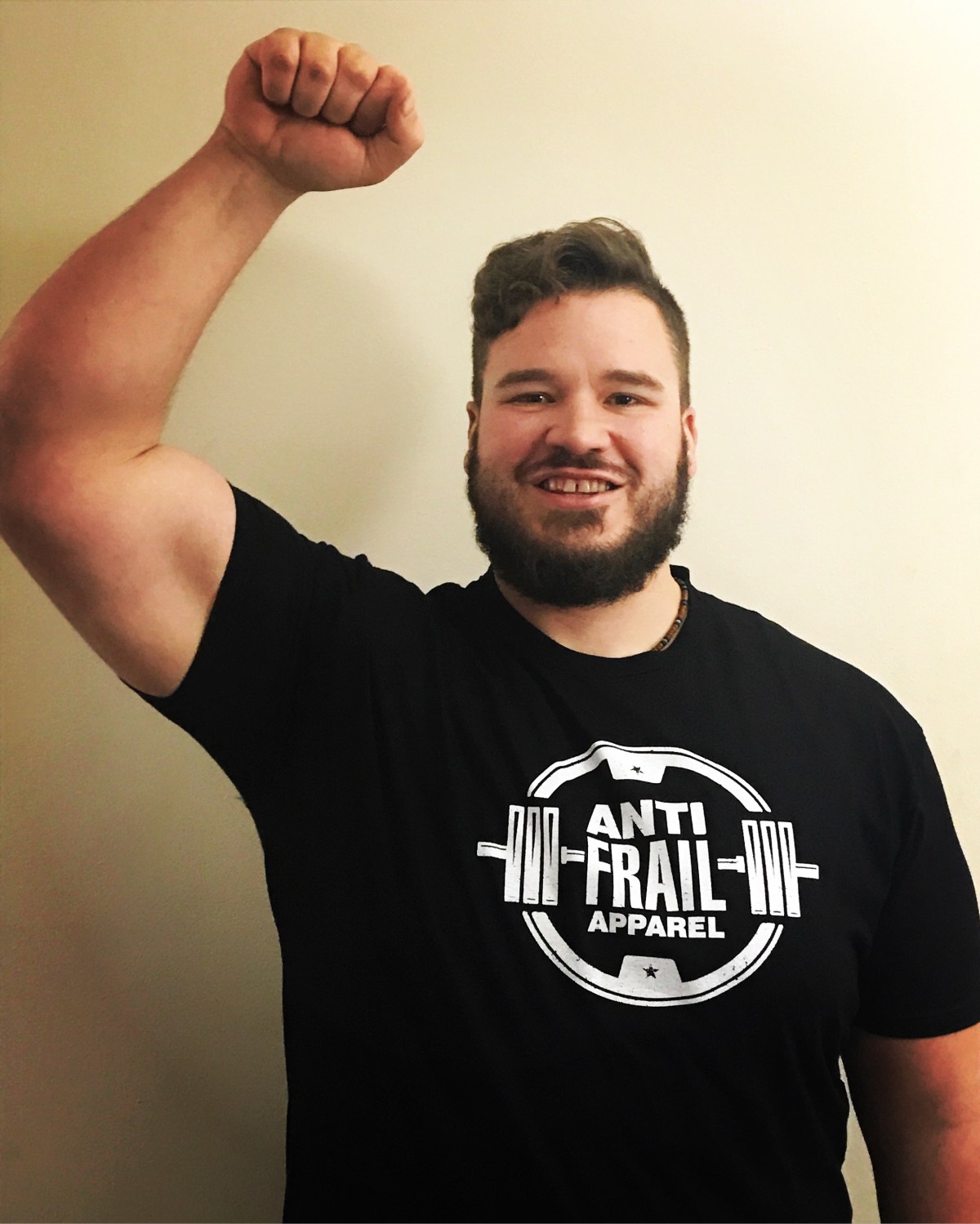
AntifrailPhoto

    In the spirit of being self-aware.  I am not a bodybuilding coach, I do not know much about crossfit even though I am thankful they helped making it cool for women and the general population to lift weights.  I do not work with elite powerlifter even though I think it is cool to see those savages at work, and I do not run aerobics classes.

   I do not have any issues if those are the types of training that get you off or amped up.  You have to enjoy what you do or you will not continue to do it. I just love seeing people getting after it and doing what they love.  If you need recommendations for a specific coach that is outside of my speciality, i will gladly attempt to steer your vessel in the right direction.  

   I teach fundamental human movements,  I tend to start teaching with kettlebell progressions forging towards barbell work with the intention to develop a base for long-term success.  I don’t see why you should not be able to train with a barbell into your 70’s and beyond.

   I believe in building and preserving lean muscle mass also known as armor and building strength.  This is why i started the brand Anti Frail! I push big bang compound movements, progressive overload, and specificity to the individual.  I love seeing kids improve not just from a performance aspect but also in the development of self-worth, confidence, and grit!

  I started lifting in high school for football.  We followed a program for D1 athletes my coach commandeered in some fashion.  I then started reading every fitness and bodybuilding magazine which mostly were geared to elite level bodybuilders that are most likely a decade into training and on drugs.  I received a Bachelor’s Degree in Exercise Science from Shippensburg University and began following everything article published by the ACSM and NSCA.

   I completed a sports performance internship through Doug Lentz in Chambersburg PA before working as a personal trainer at the Carlisle YMCA, Easton LA FItness, Unlimited Chances and Warriorfit Performance before owning my own training business.

   One of the biggest lessons I have taken home is to not to get bored with the basics.  Just because the coach is bored doesn’t mean the athlete is.  It seems the key to success and longevity is fundamental development even though the market is constantly flooded with the “the next big thing”.  It’s already been said but holds true. I do not want to make people do extraordinary things I want to make people do ordinary things extraordinarily well.  Athletes extraordinary things are scoring a game winning touchdown or putting up 50  points in a state game. My role is to build a base! Develop strength and explosiveness!  There is not a magic solution, program, pill, or training style. If there was, we would all be doing it.  Trust me! Put your head down continue learning, grinding, and becoming in tune with yourself.

   Embracing the philosophy of getting better everyday works wonders.  Try to improve quality of motion not just load. Move with attention to detail and purpose.  Enjoy victories and fight through defeats. You will have some. Anything worth having is worth working for.  

Keep training, program wisely, and get better every day. PEACE!


  • Uncategorized

To Jump or Not to Jump

Frank Donley Training's avatar Frank Donley Training July 25, 2017

Plyometric activity can be an amazing tool or a misused disaster.  Plyos have been around since 1920’s but became more common through the 60’s.  They have been a common component in athletic performance training for sprinters, jumpers, and a variety of athletes ever since. When implemented correctly they can have a beneficial impact on development. The main reasons I recommend situation dependent plyometrics are to train the central nervous system, activate fast twitch muscle fibers, increase eccentric strength, and ultimately increase an athlete’s power.

Two main problems exist.  The first is using this type of exercise solely to increase cardio-respiratory capacity.  The second problem lies in exercise prescription without attention to details such as volume, intensity, quality,  progression, and seasonal programing.

A large percentage of athletes and coaches right now are gung ho on pushing olympic lifting.  Which is great because O-Lifting features the body working as one piece much like in sport, can be used to increase power as well as explosiveness, and elicits great metabolic and hormonal responses.  However before an athlete should progress to this type of weight training, groundwork in general physical preparedness, grinding quality human movements, and some exposure to less technically demanding ballistic motion.  For example, before an athlete is expected to perform a clean, they should be proficient in the human movements of the hinge and the squat.

This same fundamental approach should be applied to bodyweight plyometric activity.  Before making an athlete run faster or jump higher, a series of deceleration training drills should be conducted.  The athlete should be taught to slow their body weight down properly by absorbing forces into the musculature and landing into an athletic position instead of just slamming into the ground in a haphazard manner.  Weight training with emphasis placed on the eccentric phase of the contraction is another method to increase one’s ability to decelerate while underload.  After this is addressed, it may be time to add low level plyometric activity and slowly progress to more advanced exercises while keeping in mind a specific parameters.

Questions to ask yourself before starting a plyometric program:

  1. Does the athlete display the relative strength levels, mobility, and proprioception necessary to safely perform the plyometric exercises prescribed with high quality of motion?
  2. What training phase is the individual currently in (off-season, preseason, in-season, postseason)  If the athlete is already accumulating a large number of foot contacts from sport, many would agree this is not the best time to administer this type of training to their program.
  3. Is your athlete in need of this type of training?  Perform two jumping tests.  One test with the athlete coming from a paused athletic position and one where the athlete uses countermovements to initiate the jump.  If there is already a great difference between the two jumps, this might not be the most productive training for your client and you can continue driving up absolute strength.
  4. What is the your athletes appropriate plyometric volume? The National Strength and Conditioning Association recommends 80-140 foot contacts depending on plyometric experience. Also, athletes over 220 lbs should reduce the amount of foot contacts on high level plyometrics due to the increase in compressive force on the joints associated with a higher body weight.  Other factors to consider are points of contact, speed, drill height, and appropriate rest periods.

Program Wisely,

Frank Donley

Posts pagination

Previous 1 … 11 12
Blog at WordPress.com.
  • Subscribe Subscribed
    • Sports Performance and Private Training
    • Join 46 other subscribers
    • Already have a WordPress.com account? Log in now.
    • Sports Performance and Private Training
    • Subscribe Subscribed
    • Sign up
    • Log in
    • Report this content
    • View site in Reader
    • Manage subscriptions
    • Collapse this bar

Loading Comments...